A CMMS manages maintenance operations from end to end, including asset registers, preventive maintenance schedules, work-order dispatch, spare-parts consumption, technician history and breakdown analysis. Tech4LYF develops CMMS software in India that can connect maintenance activities with live machine data, inventory and production systems.
The system begins with a structured asset register. Equipment can be organised by company, plant, department, production line, machine and sub-assembly. Each asset record can contain specifications, criticality, manuals, warranties, service history, spare-parts lists and responsible maintenance teams.
Preventive maintenance can be triggered in different ways. Calendar-based schedules create activities at fixed daily, weekly or monthly intervals. Runtime-based schedules use operating hours, cycles or meter readings. Condition-based activities can begin when connected monitoring systems identify vibration, temperature, current or performance conditions that require attention.
Maintenance requests can be converted into prioritised work orders and assigned to technicians. Every work order can record the problem, safety instructions, inspection checklist, labour time, parts consumed, observations, attachments, completion details and verification. This creates a traceable maintenance history for every asset.
Spare-parts requirements can be connected with inventory or ERP systems. Technicians can check availability, reserve required parts and record actual consumption against the work order. This helps stores and maintenance teams understand which assets consume the most parts and which critical items require replenishment.
Dashboards can track preventive-maintenance compliance, overdue work orders, repeated failures, maintenance cost, Mean Time Between Failures and Mean Time to Repair. Breakdown Pareto analysis helps maintenance teams identify the assets and failure categories responsible for the greatest operational impact.
Mobile maintenance execution can allow technicians to receive jobs, follow checklists, add photographs, record meter readings and close work orders from the equipment location. Offline capability can also be configured when technicians work in areas with unreliable connectivity.
Tech4LYF can implement the CMMS in phases, starting with critical assets or one production area before expanding across the plant. This reduces implementation risk and allows asset data, workflows and technician adoption to be validated during the pilot.
Connect maintenance spare-parts usage with our Inventory Management Solutions:
https://www.tech4lyf.com/service/inventory-management-solutions/
Replace disconnected maintenance records with structured schedules, work orders, spare-parts tracking and asset-performance insights.
Schedule servicing by calendar, meter readings, machine cycles or actual operating hours.
Convert maintenance requests into assigned, prioritised and traceable technician work orders.
Maintain repair, downtime, labour, cost and service history for every asset.
Reserve, issue and record spare-parts consumption against individual maintenance work orders.
Track MTBF, MTTR, overdue maintenance, recurring failures and cost by asset.
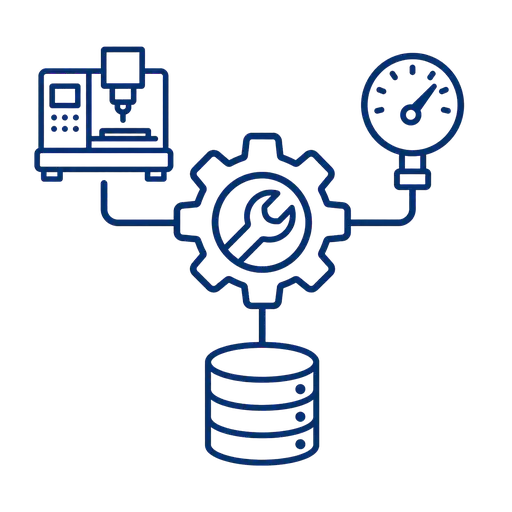
Integrate the CMMS with machines, condition monitoring and ERP inventory systems.
Configure the CMMS around your asset structure, maintenance strategy, technician workflow and existing business systems.

Review current maintenance practices, asset records, preventive schedules, work orders, breakdown history and reporting gaps.
Define the asset hierarchy, criticality, maintenance plans, spare-parts lists and migration requirements.
Configure requests, priorities, approvals, technician assignments, checklists, escalations and closure verification.
Build the required modules and connect applicable ERP, inventory, machine or condition-monitoring systems.
Pilot the CMMS with critical assets or one production area and train maintenance and stores users.
Expand the approved configuration and refine schedules, dashboards and maintenance controls using operational feedback.
A CMMS primarily manages maintenance execution, including assets, preventive schedules, work orders, technicians, spare parts and maintenance history. Enterprise Asset Management normally covers a broader asset lifecycle, including acquisition, capital planning, contracts, financial management and retirement. The functions can overlap depending on the implementation scope.
Yes. A CMMS can create maintenance work orders from machine operating hours, production cycles or meter readings. These values can be entered manually or received from compatible PLC, machine-monitoring or IoT systems. The required integration depends on the machine and available data interface.
Offline execution can be included when required. Assigned work orders, checklists and essential asset information can be stored temporarily on the technician’s device. Completed activities synchronise when connectivity returns. Offline permissions and data-conflict rules should be defined during implementation.
Yes. The CMMS can exchange spare availability, reservations, issues, returns and consumption data with a compatible ERP or inventory system. Integration may use APIs, database connections, files or custom connectors depending on the existing software.
The process starts by collecting existing equipment lists, spreadsheets, tags, manuals and maintenance records. Assets are then organised into a consistent hierarchy and classified by type, location and criticality. Maintenance and production teams should validate the information before it is migrated into the CMMS.
A focused pilot commonly takes approximately 8 to 12 weeks when the asset list, maintenance workflows and user responsibilities are available. A multi-plant implementation or a project requiring extensive data cleansing, mobile features and system integration will require a longer phased rollout.
Cost depends on the number of assets, users, plants, maintenance modules, mobile and offline requirements, integrations, historical-data migration and machine connectivity. Tech4LYF can provide a scope-based estimate after completing a maintenance maturity assessment.