Custom hardware · Chennai
Design your industrial IoT device
Pick what the device should measure, how it talks, how it is powered and where it will live. The 3D model updates as you choose, and you get a spec sheet our hardware team can quote from.
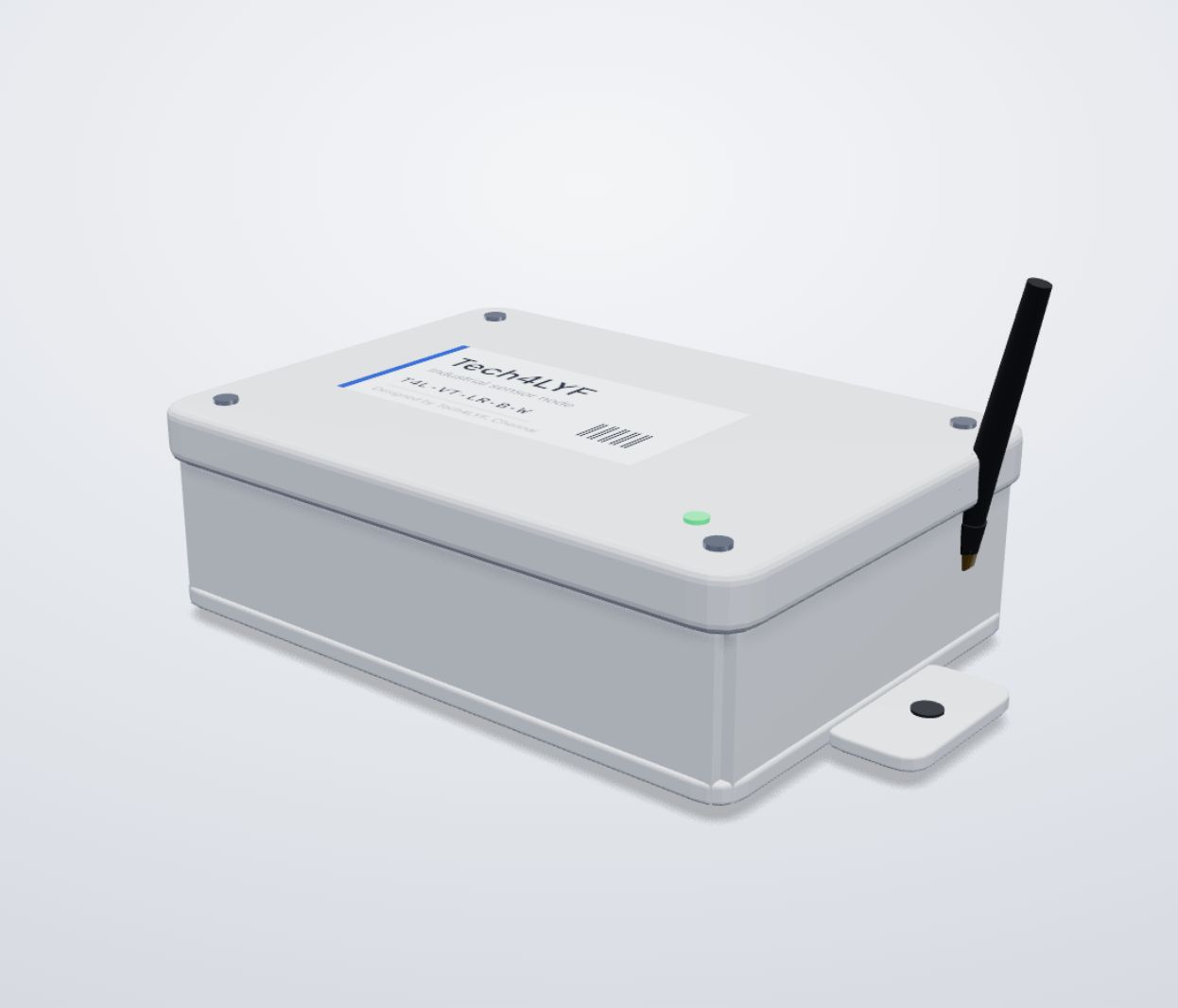
Spec sheet
What we would build for you
Spec sheet PDF
Send this design to our hardware team
The spec above is yours to keep either way. Leave your details and we will open a printable spec sheet, and an engineer can get back to you about feasibility and next steps.
From sketch to shop floor
How a custom device gets built
Most of our hardware projects follow the same six steps. The early ones are quick; the field trial is where the real learning happens.
- Requirement callWhat to measure, where it is mounted, how data should reach your team, and how many units.
- Schematic and PCBSensor, radio and power design, then a board layout sized for the enclosure you picked.
- First prototypesA small batch of hand-assembled boards with first firmware, tested on our bench.
- Field trialA few units on your machines for a few weeks, sending data to a test dashboard.
- Pilot batchFixes from the trial go in, and a pilot run is built and installed.
- Production and supportVolume builds, over-the-air firmware updates where the radio allows, and a dashboard your team uses daily.
Plain answers
What decides battery life and range
Reporting interval matters most
A node that wakes every 15 minutes can run for years on one primary cell. The same node reporting every 10 seconds may need mains power. Radio choice, signal strength and temperature come next.
Walls and metal decide more than the datasheet
LoRa covers a whole plant from one gateway in most layouts. BLE and Wi-Fi need a receiver or access point nearby. 4G works anywhere the SIM has signal, including outdoor sites with no network at all.
Quantity, enclosure and certification
Volume, the enclosure (moulded or machined), the radio module and any certification you need move the unit cost most. We go through them on a short call once we know your quantities.
Your data, your dashboard
Devices send to a dashboard we set up for you, or straight into your ERP or SCADA through MQTT or an API. Tech4LYF HQ can show it next to production and maintenance data.
FAQ
IoT device studio questions
Is this a quote?
No. It is a starting spec. Our hardware team checks feasibility, suggests changes and then quotes based on your quantities.
Do you build the PCB and firmware in-house?
Yes. Tech4LYF designs the electronics, writes the firmware and builds the cloud dashboard, so one team owns the whole device. See our embedded and PCB design service for more.
Can you white-label the device?
Yes. The enclosure label, dashboard and mobile app can carry your brand. Our OEM and white-label IoT service covers this.
Which radio should I pick for a factory?
For many sensors spread across a plant, LoRa with one or two gateways is usually the simplest. For a few devices near an existing network, Wi-Fi works. For moving assets inside a building, BLE. For remote or outdoor sites, 4G. The free IIoT connectivity advisor goes deeper.
Is my design saved anywhere?
Your choices stay in your browser. They are only sent to us if you ask for the spec sheet and fill in the form.
Related