How Tech4LYF Built a Connected CMMS for a Leading Multi-Line Manufacturer
Tech4LYF built a connected CMMS for preventive maintenance, technician work orders, asset history, spare-parts control and reliability reporting.
View case studyWhat is a digital QMS for manufacturing? A digital Quality Management System controls inspections, non-conformances, corrective actions, calibration records and quality evidence through structured, traceable workflows. For this…
What is a digital QMS for manufacturing? A digital Quality Management System controls inspections, non-conformances, corrective actions, calibration records and quality evidence through structured, traceable workflows.
For this automotive components supplier, Tech4LYF developed a connected QMS that linked quality activities with production orders, products, batches, operators, suppliers and manufacturing operations.
The platform replaced disconnected quality records with controlled digital inspection and approval workflows. It enabled teams to capture results at the source, respond to non-conformances and retrieve supporting evidence from one quality-management environment.
The solution was designed for phased adoption, allowing the manufacturer to begin with priority inspection and NCR workflows before extending the system across additional quality processes and production areas.
A leading automotive components supplier operated multiple production and inspection processes covering incoming materials, in-process quality checks, final inspection and non-conformance management.
Quality records were distributed across paper inspection sheets, spreadsheets, emails and department-specific files. Although individual inspections were being completed, retrieving the complete evidence for a batch, production order, machine or customer complaint required substantial manual coordination.
The manufacturer faced several connected quality-management challenges:
The organisation needed a digital Quality Management System that could connect inspection, non-conformance, corrective action, calibration and audit evidence with its existing ERP and manufacturing workflows.
Tech4LYF designed and developed a digital Quality Management System around the manufacturer’s existing inspection, approval and corrective-action processes.
The solution converted approved inspection plans, product specifications, control limits and quality checkpoints into structured digital workflows. Operators and inspectors could record measurements, observations, acceptance decisions and supporting evidence directly against the relevant production order, operation, batch or component.
When an inspection result fell outside an approved limit, the system could initiate a controlled non-conformance workflow. Quality teams could document the affected quantity, containment decision, disposition, root-cause analysis, corrective action, responsible owner and required approval within one traceable record.
A central NCR and CAPA dashboard provided visibility into open actions, pending approvals, overdue responsibilities and closure evidence. This helped quality managers review progress without consolidating information from separate spreadsheets or email conversations.
Tech4LYF also incorporated calibration controls for inspection and measurement equipment. Gauge status, calibration schedules, due dates and supporting certificates could be maintained digitally. Users could verify equipment status before recording an inspection result.
The QMS was designed to exchange relevant information with ERP, MES and production systems. Production orders, products, batches, suppliers and material references could enter the quality workflow, while approved inspection results, rejection information and quality status could be returned through controlled integration.
Historical inspection, NCR, CAPA and approval records remained searchable by product, production order, batch, lot, supplier, machine or date range, creating an organised source of evidence for internal reviews, customer enquiries and quality audits.
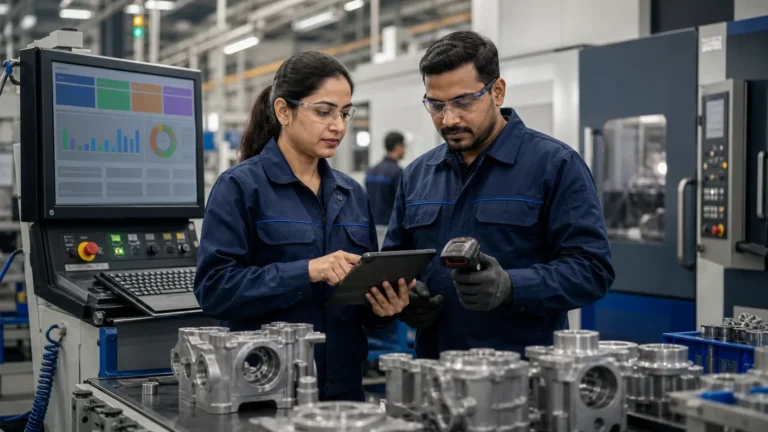
Inspectors recorded measurements, observations and acceptance results against production orders, operations and batches.
Non-conformances were documented with affected quantities, containment decisions, disposition records and approvals.
Root-cause analysis, corrective actions, owners, due dates, effectiveness reviews and closure evidence were controlled digitally.
Gauge status, calibration schedules, due dates and certificates were maintained for inspection-equipment verification.
Inspection, approval and corrective-action records could be retrieved by order, batch, product, supplier or date.
The QMS connected quality workflows with relevant ERP, MES, supplier and shop-floor production information.
The digital QMS established a shared quality-information flow for inspectors, operators, production supervisors and quality management.
Inspection results could be recorded against the relevant production context instead of remaining in isolated paper forms and spreadsheets. Quality teams gained a structured view of accepted results, rejected characteristics, non-conformances and pending corrective actions.
NCR and CAPA records remained connected from initial detection through containment, investigation, corrective action, effectiveness review and authorised closure. Responsibilities, approvals and supporting evidence became easier to follow.
Calibration status and inspection evidence could be retrieved through controlled digital records, improving readiness for internal reviews, customer enquiries and quality audits.
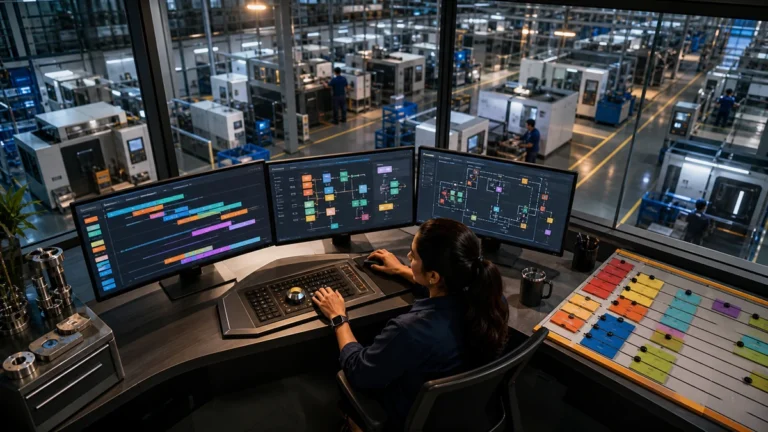
The manufacturer gained a scalable quality-management foundation that could be expanded across additional products, production lines, suppliers and manufacturing locations.
Project Outcome
Quality Management Transformation
The digital QMS created one controlled record of inspections, non-conformances, corrective actions and quality evidence.
Tech4LYF develops digital Quality Management Systems that connect inspections, NCR/CAPA, calibration, suppliers and audit evidence with manufacturing operations. Begin with one priority quality workflow and expand across products, lines and plants.